Football positions explained: every role on the pitch
A football team has 11 players: a goalkeeper and ten outfield players split into defenders, midfielders and forwards. Here is what each position does, how formations work and how many substitutes are allowed.

By Steffen Fonvig · Published · 3 min read
A football team has 11 players on the pitch: one goalkeeper and ten outfield players. The outfield players are usually grouped as defenders, midfielders and forwards, and how many of each a team uses is its formation. Only the goalkeeper is a position in the Laws of the Game: everything else is tactics.
How many players are in a football team?
Each team starts with a maximum of 11 players, one of whom must be the goalkeeper. A match cannot start or continue if a team has fewer than seven players, for example after several sending-offs.
How many substitutes are allowed?
In top-level competitions a team can make up to five substitutions, but only in three separate stoppages during play; changes at half-time do not count as one of the three. Each competition decides how many substitutes may be named on the bench. In the Premier League it is nine. In knockout matches that go to extra time, one more substitution is allowed. Some competitions, including the Premier League, also allow extra substitutions for players with a suspected concussion.
A player who has been substituted cannot return to the pitch in the same match.
Goalkeeper
The goalkeeper is the only player allowed to handle the ball, and only inside their own penalty area. They must wear colours that set them apart from the other players and the referee. Modern goalkeepers are also expected to play with their feet, starting attacks from the back.
Defenders
- Centre-back: plays in the middle of the defence, wins headers and tackles, and blocks shots. Most teams use two, some use three.
- Full-back (right-back and left-back): defends the wide areas and often runs forward to support attacks.
- Wing-back: a more attacking full-back used when a team plays with three centre-backs, covering the whole flank.
- Sweeper (libero): a free defender behind the others, now rarely used as a fixed role.
Midfielders
- Defensive midfielder (holding midfielder, “number 6”): sits in front of the defence, breaks up attacks and keeps possession simple.
- Central midfielder (“number 8”): links defence and attack, covering ground in both directions.
- Attacking midfielder (“number 10”, playmaker): plays between the opponents’ midfield and defence and creates chances.
- Wide midfielder: plays on the flank in a midfield four, helping both in attack and defence.
Forwards
- Centre-forward (striker, “number 9”): the team’s main goal threat, playing closest to the opponents’ goal.
- Winger: attacks down the flanks, dribbles past full-backs and delivers crosses or cuts inside to shoot.
- Second striker: plays just behind or beside the centre-forward.
- False 9: a centre-forward who drops deep into midfield instead of staying high, pulling defenders out of position.
Shirt numbers and positions
Traditionally the starting 11 wore 1 to 11, and the numbers still hint at a role: 1 for the goalkeeper, 2 and 3 for the full-backs, 4 and 5 for centre-backs or central midfielders, 9 for the centre-forward, 7 and 11 for the wingers. Today players keep a squad number for the season, so a number no longer guarantees a position.
Formations: how positions fit together
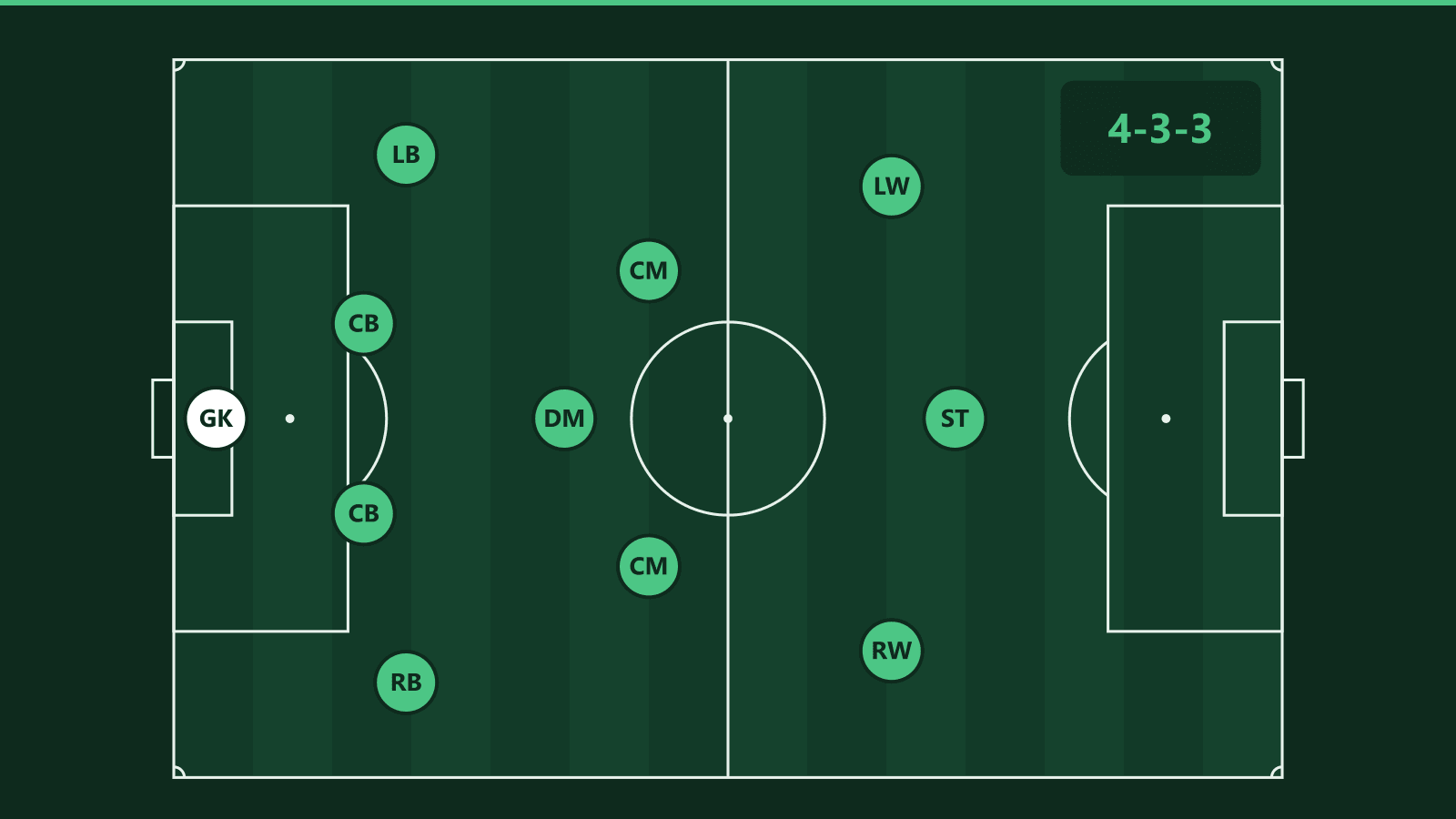
A formation counts the outfield players from defence to attack, so a 4-4-2 has four defenders, four midfielders and two forwards. Common formations include:
| Formation | Shape |
|---|---|
| 4-4-2 | Four defenders, four midfielders, two strikers |
| 4-3-3 | Four defenders, three central midfielders, a centre-forward and two wingers |
| 4-2-3-1 | Two holding midfielders, three attacking midfielders behind one striker |
| 3-5-2 | Three centre-backs, wing-backs on the flanks, two strikers |
Formations describe a starting shape: in a match, players move between positions as the team attacks and defends.
More football basics
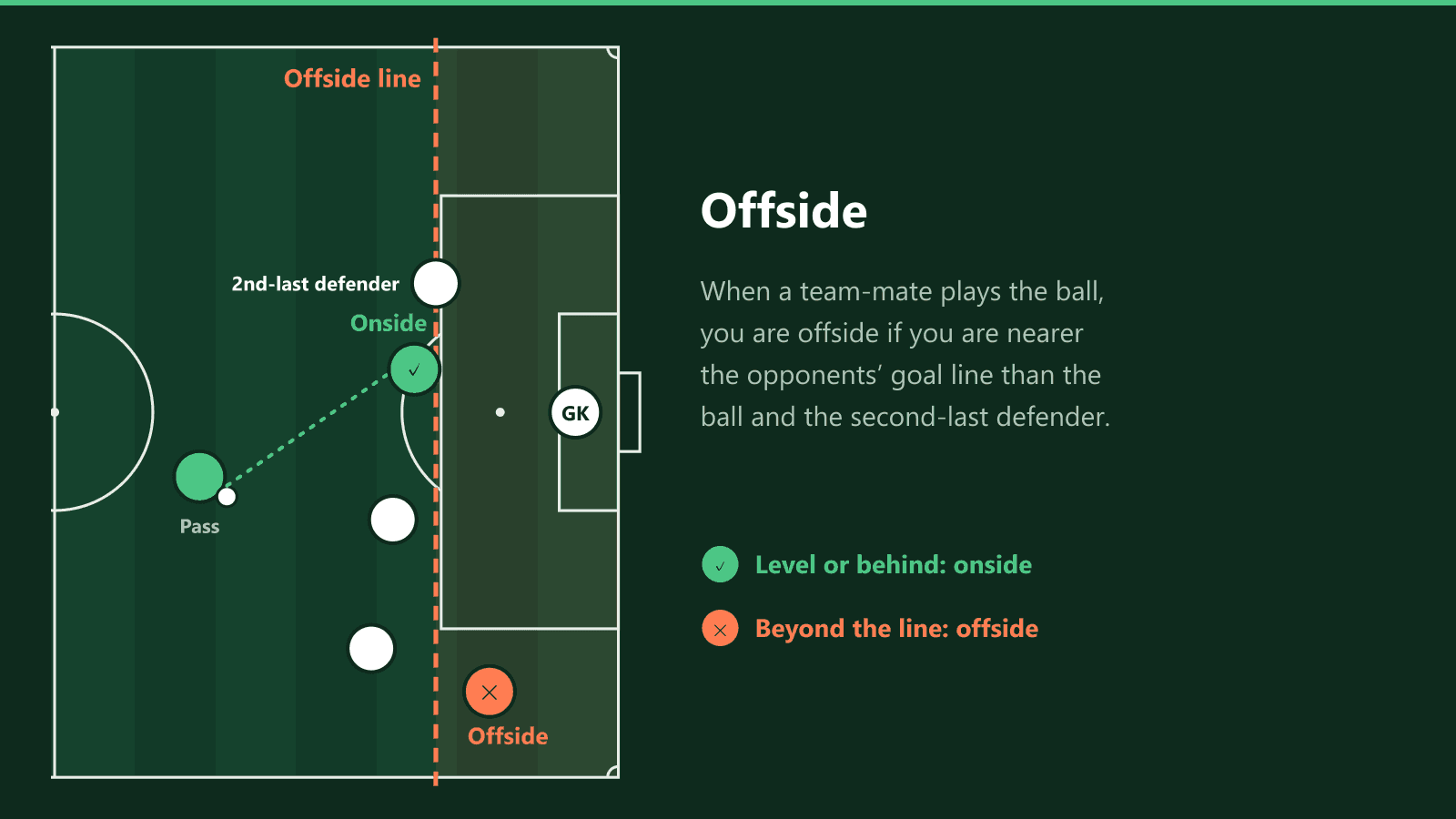
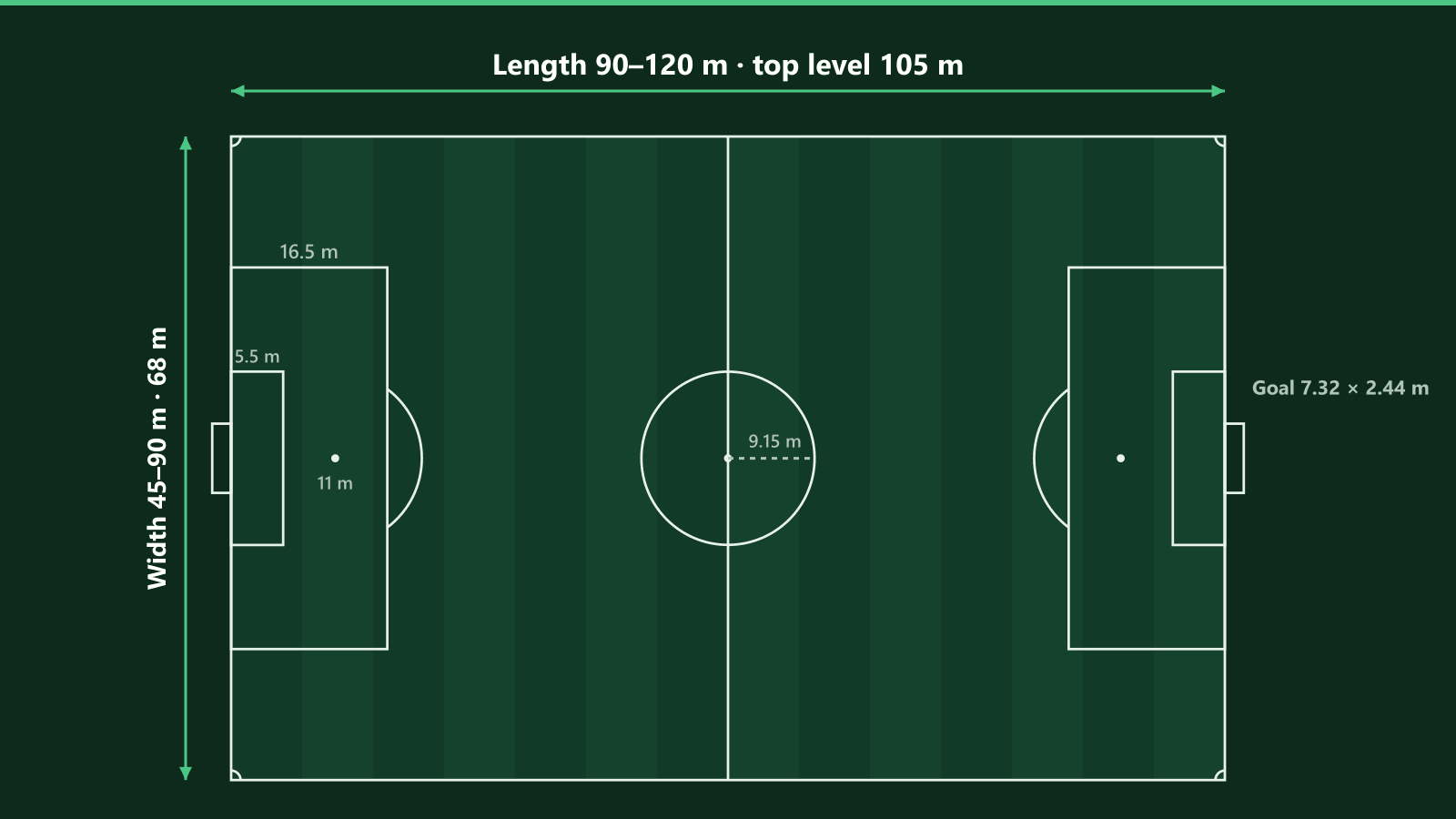
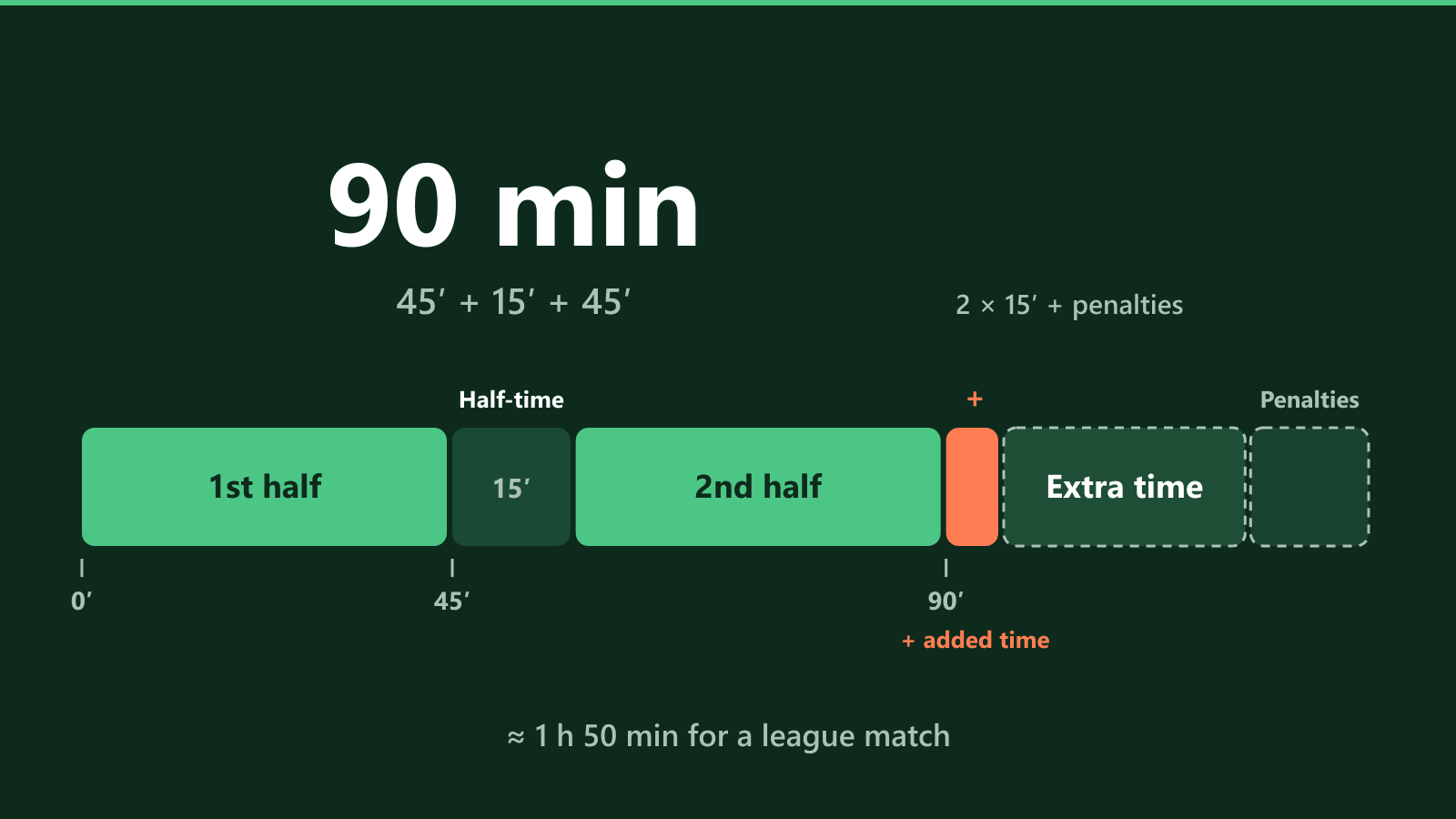
Read our guides to the offside rule, how long a football match lasts and how big a football pitch is, or see who is playing in today’s football scores.